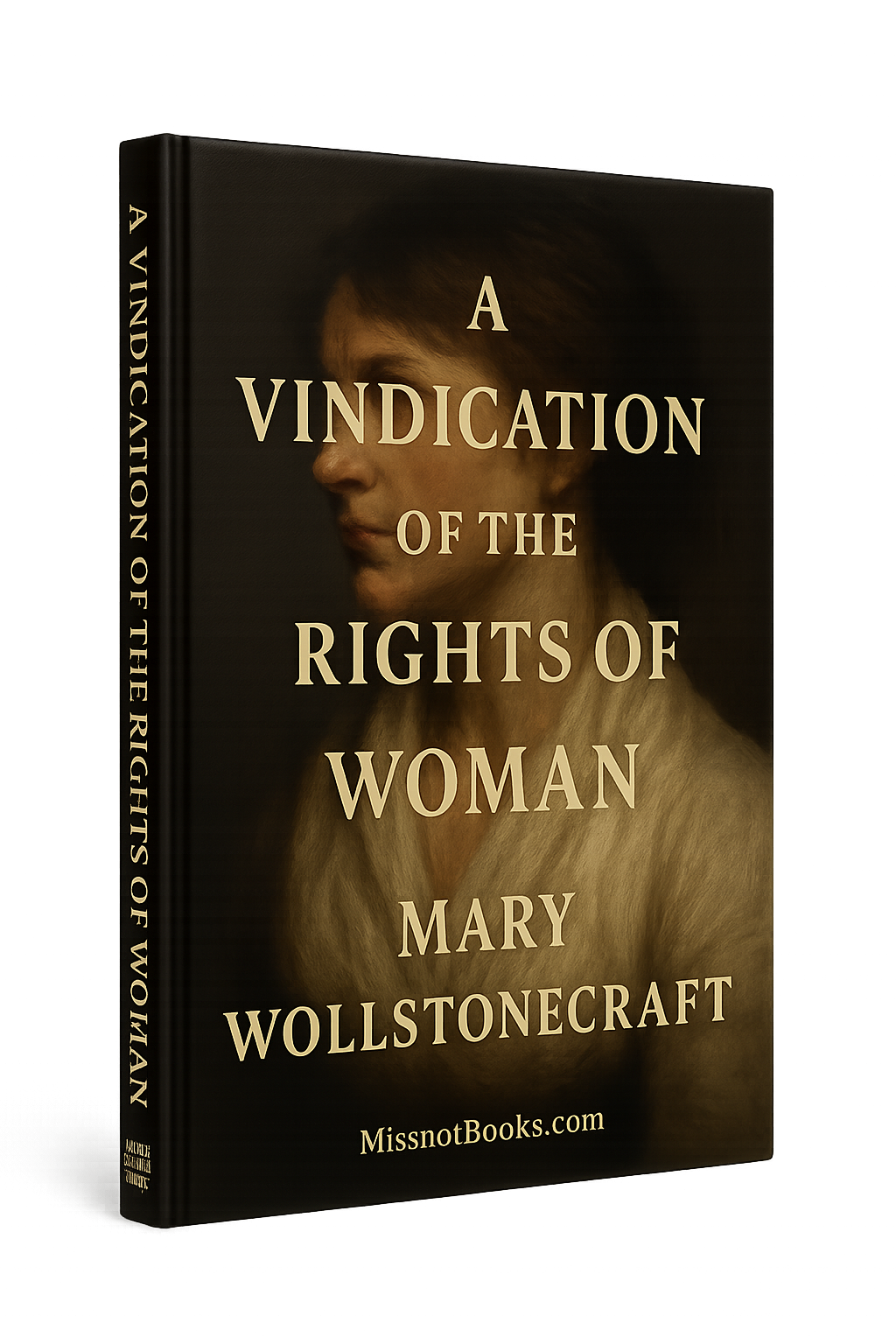
A Vindication of the Rights of Woman
In a world still grappling with the unequal status of women, one book emerged as a beacon of hope and reason, fundamentally transforming the discourse on gender and rights. This pivotal work challenged the societal norms of the 18th century, advocating fiercely for women's education and equality. It laid the groundwork for modern feminist thought and did not simply dwell on demands for equality; it delved deeply into the philosophical and moral arguments underpinning these demands, forging an intellectual path that would inspire generations to come.
Core Ideas and Main Arguments
- Advocacy for Education: The author posits that education is essential for women, arguing that ignorance and lack of knowledge are tools of oppression.
- Equality and Rationality: The text champions the idea that women are equally capable of reason and should not be confined to the domestic sphere due to gender.
- Critique of Patriarchal Society: It boldly criticizes the male-dominated culture that defines women by their relationships to men rather than as individuals with their own rights and needs.
- Call for Women’s Rights: The author clearly articulates the need for women's social and political rights, framing them as essential to the moral and civic health of society.
- Moral Philosophy: It intertwines discussions of ethics and morality, asserting that true virtue is not tied to gender but to the capacity for reason and self-improvement.
Author’s Intentions and Context
The author set out to illuminate the systemic inequalities faced by women in a time when Enlightenment ideals of liberty and reason were gaining momentum. She sought to address the pervasive cultural belief that women were inherently inferior to men, challenging deeply ingrained views within society. Responding to the limitations placed on women’s roles as mere wives and mothers, this work aimed to promote a radical shift in perception — advocating that women's liberation was the pursuit of not just their rights but of a society's moral progress as well.
Structure of the Book
This significant text is methodically structured into several distinct sections:
- Introduction: Setting the stage for the arguments to follow.
- Education of Women: A detailed exploration of the need for women's education as a vehicle for equality.
- Critique of Social Norms: Analysis of the ways society constrains women, often through misguided notions of virtue.
- Philosophical Arguments: An appeal to reason and morality, linking women's rights to broader human rights.
- Conclusion: A powerful summation that calls for action and reflection among both men and women.
Each section builds upon the previous one, creating a cohesive narrative that underscores the urgency and significance of the author’s call for change.
Key Takeaways
- Empowerment through Knowledge: Education is fundamental to personal and societal transformation.
- Equality is a Moral Imperative: True justice encompasses the rights of all individuals, regardless of gender.
- The Role of Women Must Evolve: Society benefits when women are able to contribute fully beyond domestic roles.
- Challenge Established Norms: Questioning societal beliefs is essential for progress.
Why It’s Important to Read
This work remains profoundly relevant today, as discussions about gender equality persist across cultures and societies. It serves as a foundational text for anyone interested in feminist theory, political philosophy, or social justice. Readers from various backgrounds — students, activists, and those simply seeking a deeper understanding of gender dynamics — will find insights that resonate with contemporary struggles for equality. The moral urgency and clarity of thought in this book make it essential for those eager to engage with the intellectual roots of gender discourse.
Impactful Quotes and Analysis
-
"I do not wish them [women] to have power over men; but over themselves."
This quote encapsulates the core of the author’s argument: empowerment is not about domination but about autonomy and self-determination. A timeless reminder that true freedom is self-empowerment. -
"The woman who conforms to the customs of society will be only a mortal."
This observation challenges readers to consider the cost of conformity and highlights the transformative power of nonconformity in the pursuit of individuality and rights. -
"I earnestly wish to point out in what manner women, by being treated as mere women, lose the noblest part of their character."
Here, the author critiques the degradation of women's potential in a restrictive society, urging readers to recognize that the denial of rights diminishes human potential across the board.
About the Author
Mary Wollstonecraft (1759-1797) was a British writer, philosopher, and advocate for women's rights. Often hailed as one of the founding figures of feminist philosophy, she used her platform to address issues of social justice and moral philosophy. Her lasting legacy lies in her pioneering stance for gender equality and her influence on later feminist movements, marking her as a critical voice in the evolution of political thought surrounding women’s rights.
This monumental work is A Vindication of the Rights of Woman by Mary Wollstonecraft, brought to you for educational purposes by MissNotBooks.com.