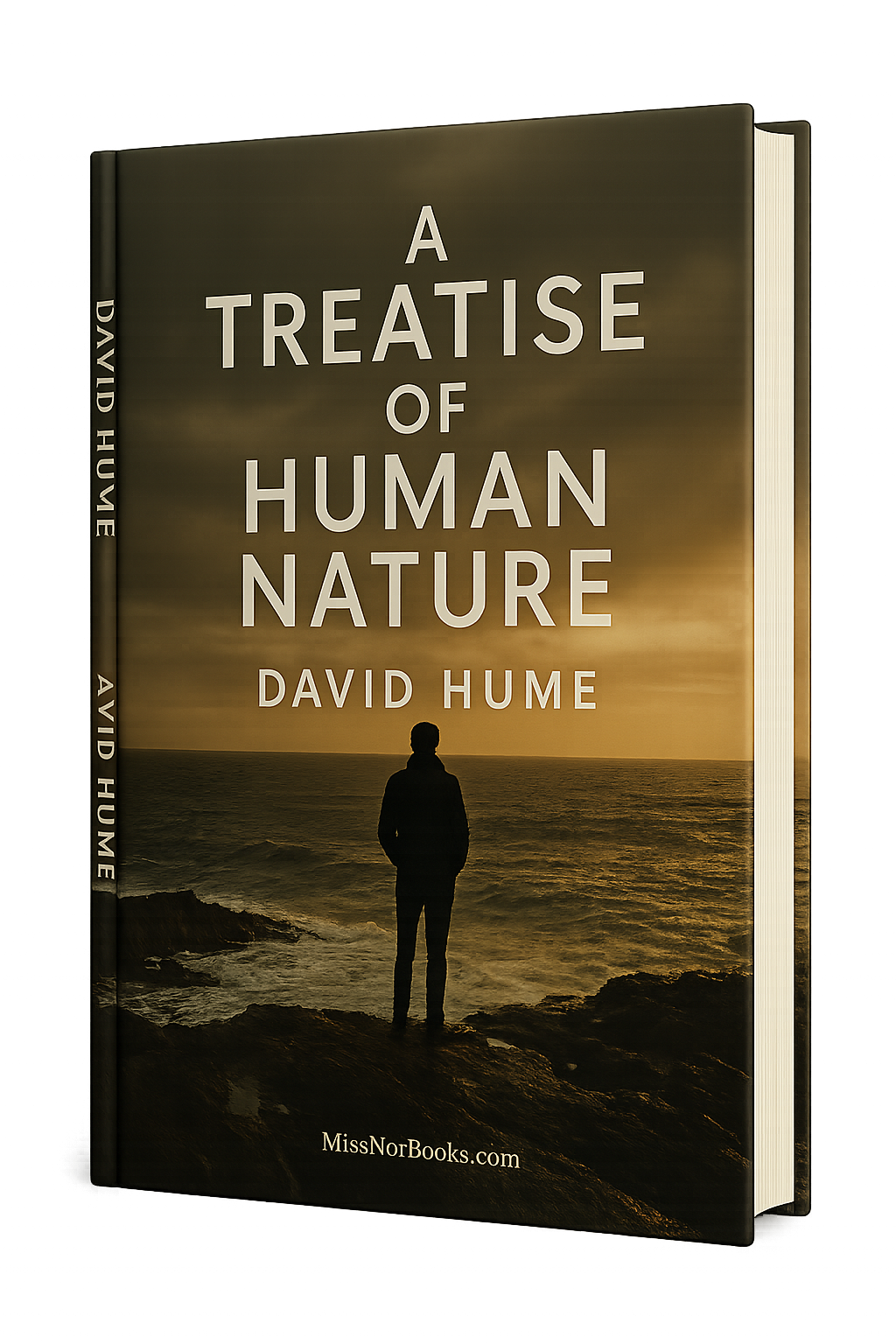
A Treatise of Human Nature
The power of human thought is often defined by the ability to scrutinize the very fabric of our understanding—spanning the realms of philosophy, science, psychology, and society. A groundbreaking piece within the canon of Western literature confronts and redefines the metaphysical inquiries into human nature, emphasizing empirical evidence as the cornerstone of knowledge. Through its innovative approach, this work challenges established doctrines and pioneers a new methodology that weaves together observations of ordinary human experiences with profound philosophical inquiries. Its influence continues to resonate, provoking essential dialogue about the foundations of knowledge and the nature of existence itself. Don’t miss the opportunity to engage with one of the most influential works of all time. Buy it today and explore the profound depths of human understanding.
Core Ideas and Main Arguments
-
Empiricism and Experience: The author argues that all knowledge is rooted in sensory experience, marking a departure from rationalist traditions that prioritize reason.
-
Skepticism about Causation: Challenges the notion of causation, asserting that we cannot derive necessary connections from mere observation, thus inviting readers to reconsider the assumptions behind cause-and-effect relationships.
-
The Nature of the Self: Investigates the concept of identity, arguing that the self is not a singular essence but a collection of perceptions and experiences.
-
Moral Sentiments: Explores the foundation of morality as derived from human sentiments rather than rationalism or divine command, emphasizing a pragmatic understanding of ethics based on human nature.
-
Religion and Human Understanding: Critiques religious beliefs through a lens of skepticism, questioning the rational basis of traditional faith and advocating a more secular approach to understanding the world.
Author’s Intentions and Context
Set against the backdrop of Enlightenment thought, the author aimed to bridge gaps between philosophy and scientific reasoning. In a period characterized by rapid advancements in empirical science and questioning of established religious doctrines, the author sought to articulate a new vision of human understanding. Addressing prevalent philosophical disputes, this work devises a robust framework for examining human behavior and thought, aiming to ground philosophy in the realities of human experience rather than abstract speculation.
Structure of the Book
The work is organized into three primary parts:
-
Of the Understanding: Introduces the foundations of human knowledge, emphasizing empiricism, causation, and skepticism.
-
Of the Passions: Examines human emotions and desires, mapping their intricate connections to moral judgments and social behavior.
-
Of Morals and Religion: Discusses moral philosophy and critiques religious beliefs, culminating in a reflection on the implications of these ideas for understanding human nature and society.
Each section builds upon the previous one, creating a cohesive narrative that deepens the reader’s insights into the fundamental aspects of humanity.
Key Takeaways
-
Knowledge is fundamentally rooted in experience, leading to a call for skepticism regarding our assumptions about reality.
-
The self is a fluid compilation of perceptions, challenging the concept of a constant identity.
-
Moral decisions are founded in human sentiments rather than rigid rationality, promoting a more empathetic understanding of ethics.
-
Religious beliefs require critical examination and should be understood within the context of human psychology and societal norms.
Why It’s Important to Read
This work remains a cornerstone of philosophical inquiry and is essential reading for anyone interested in understanding the intricacies of human thought and behavior. Scholars, students, and curious minds alike will find its insights valuable in various fields, including philosophy, psychology, and sociology. Its relevance extends into contemporary discussions about rationality, ethics, and the human condition, making it a timeless contribution to intellectual discourse.
Impactful Quotes and Analysis
-
"Reason is, and ought only to be the slave of the passions."
This powerful assertion denotes the limited role of reason in governing human behavior, proposing that our emotional drives ultimately dictate our decisions and actions. -
"All perception is a form of belief."
This thought-provoking statement invites readers to reflect on the nature of perception and its subjective interpretations, emphasizing that reality is filtered through personal experiences. -
"The mind is a kind of theater, constantly assembling and reforming a multitude of perceptions."
Here, the author paints a vivid picture of the mind as a dynamic construct, underscoring the notion of identity as constantly evolving rather than fixed.
About the Author
David Hume (1711–1776) was a Scottish philosopher, historian, and economist, recognized as one of the most significant figures of the Enlightenment. His work laid the foundations for empiricism and skepticism, profoundly influencing subsequent philosophical discourse. Hume's exploration of human nature, emotions, and ethics continues to inspire modern thought, reinforcing his legacy as a pivotal thinker in the transition from early modern philosophy to contemporary approaches in various disciplines.
This monumental work is A Treatise of Human Nature by David Hume, brought to you for educational purposes by MissNotBooks.com.