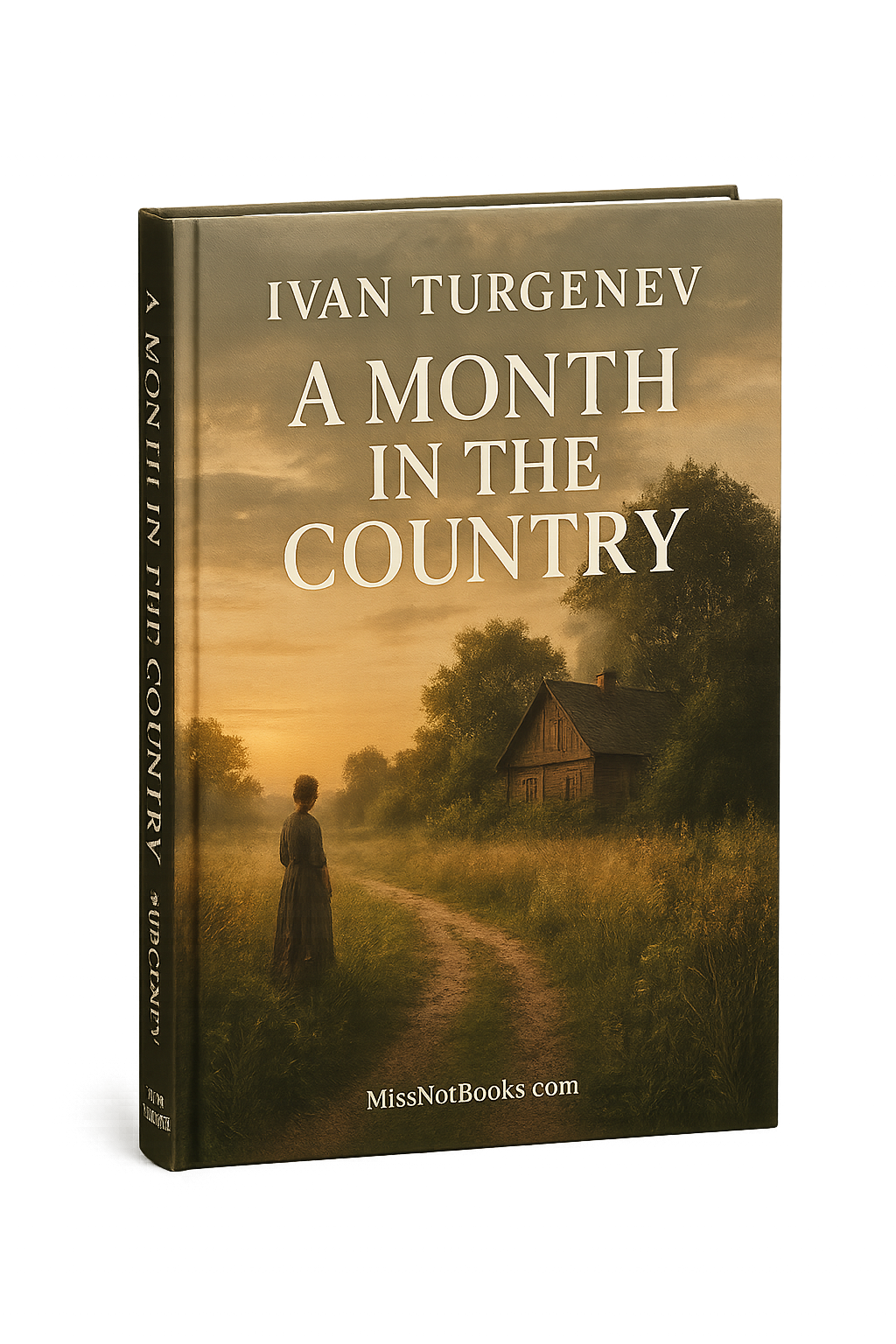
A Month in the Country
In an era marked by profound upheaval and transformation, one literary masterpiece emerged that reshaped the landscape of human emotion, love, and personal reflection. This book was a revolutionary exploration of the depths of human experience, focusing on relationships, societal expectations, and the complex interplay between personal desires and external realities. Its poignant narrative and rich character development challenged readers to reconsider their own lives and relationships, igniting a shift in how literature could engage with the innermost facets of the human soul. The impact of this work resonates through time, inviting fresh perspectives on love and longing—a timeless testament to the struggles and joys of human existence. Don’t miss the opportunity to engage with one of the most influential works of all time. Buy it today and explore the beauty of human emotion.
Core Ideas and Main Arguments
-
Exploration of Love: The narrative delves into the complexities of romantic and platonic love, revealing its contradictions and the pain that often accompanies it.
-
Conflict Between Desire and Duty: The book illustrates the struggle between personal aspirations and societal obligations, presenting characters who face profound internal conflicts.
-
Nature as a Symbol: Through exquisite descriptions of the rural landscape, nature emerges as a character in its own right, representing both freedom and confinement.
-
Temporal Reflection: The story invites reflection on the passage of time, emphasizing how moments of joy and sorrow shape individual destinies.
Author’s Intentions and Context
Written during a time of significant social change in 19th-century Russia, the author sought to capture the zeitgeist of a society grappling with modernization and its effects on traditional values. Addressing the philosophical challenges of his time, the narrative was an earnest attempt to portray the emotional tumult faced by individuals caught between their desires and the expectations of a rapidly evolving culture. The author aimed to humanize his characters, portraying their vulnerabilities in a world filled with constraints, thereby universalizing their experiences for readers.
Structure of the Book
The book is methodically structured into several distinct but interrelated sections, each contributing richly to the overarching theme:
-
Introduction of Characters: Engaging with the main characters and their backgrounds, setting the stage for their emotional journeys.
-
Development of Relationships: A deep dive into the complexities of the characters' interactions, showcasing pivotal moments of connection and estrangement.
-
Climactic Confrontation: An intense exploration of the conflicts that arise between personal desires and social conventions that lead to a turning point in the narrative.
-
Resolution and Reflection: Concluding with moments of introspection, characters come to terms with their experiences and choices, highlighting the ongoing themes of longing and regret.
Key Takeaways
-
Love is complicated and often fraught with misunderstanding and unrequited feelings.
-
The tension between individual desires and societal expectations is a universal human experience.
-
Nature serves as both a backdrop and a catalyst for personal transformation.
-
Time influences relationships, adding weight to joyful moments as well as sorrowful ones.
Why It’s Important to Read
This work is essential not only as a profound narrative but also as a reflection of the human condition. Its insights remain strikingly relevant in contemporary discourse surrounding love, duty, and identity. Readers interested in psychology, philosophy, and literature will find themselves enriched by the nuanced portrayal of emotions and the delicate dance of human interactions. It provides valuable lessons in resilience and self-understanding, making it a must-read for anyone seeking depth in their literary explorations.
Impactful Quotes and Analysis
-
“What is this life if, full of care, we have no time to stand and stare?”
This resonates as a call to appreciate the moments of beauty and reflection amidst life’s chaos, urging readers to embrace the inner stillness that often eludes them. -
“The two most powerful warriors are patience and time.”
This highlights the importance of endurance and the wisdom of recognizing that emotional struggles often require time to unfold and resolve. -
“It is a great misfortune to have one’s heart too easily entangled.”
A poignant reminder of the vulnerability that accompanies love, reinforcing the intricate balance between emotional involvement and self-preservation.
About the Author
Ivan Turgenev (1818-1883) was a prominent Russian novelist, playwright, and short story writer who played a crucial role in the development of Russian literature. Known for his keen psychological insight and pastoral depictions of Russian life, Turgenev's works often explored themes of love, nature, and the nuances of human emotion. His legacy endures through the profound impact he has had on both Russian literary traditions and the broader literary canon, influencing notable writers such as Fyodor Dostoevsky and Anton Chekhov.
This monumental work is A Month in the Country by Ivan Turgenev, brought to you for educational purposes by MissNotBooks.com.