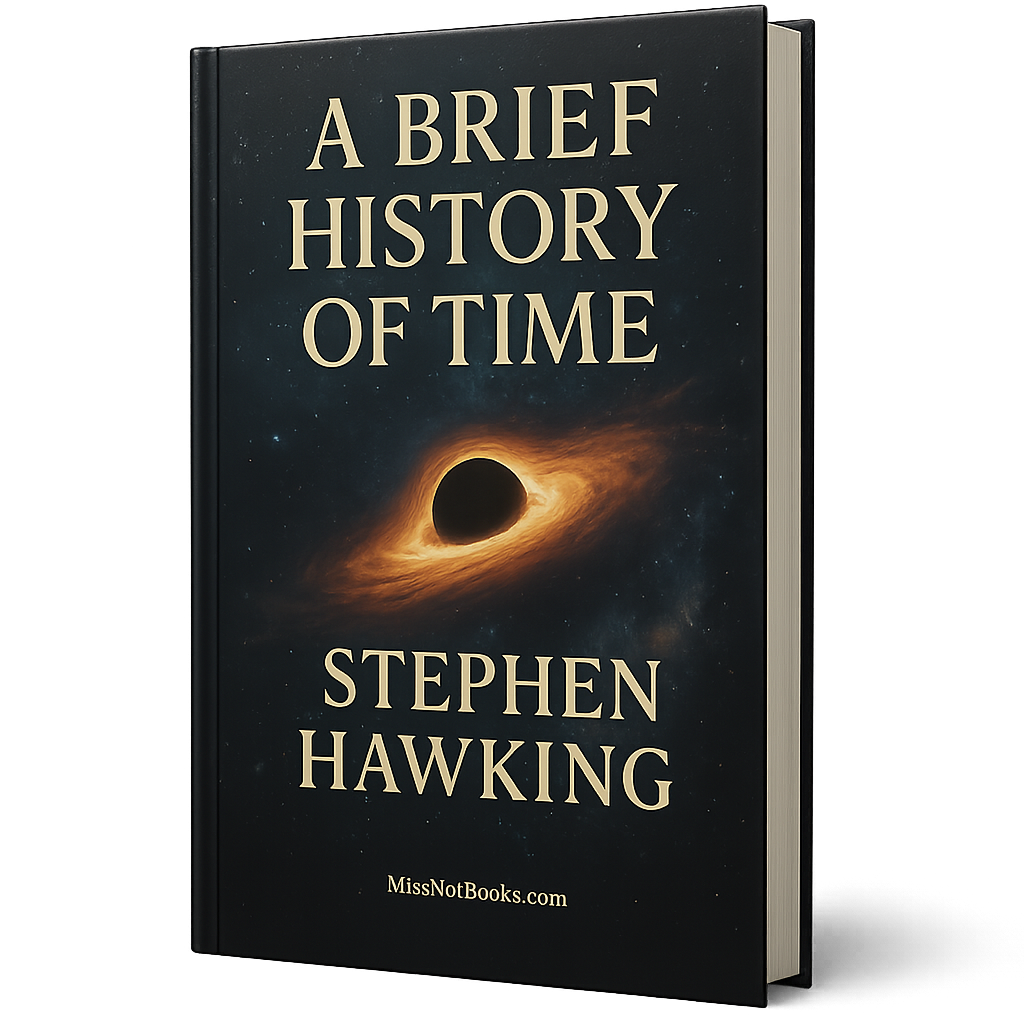
A Brief History of Time
In a world where the mysteries of the cosmos once seemed insurmountable, one profound text emerged to challenge our understandings of time, space, and existence itself. This transformative work did not merely recount scientific theories; it revolutionized how we perceive the universe, introducing a compelling dialogue between science and philosophy. Its groundbreaking ideas reshaped intellectual thought, prompting readers to explore the depths of reality and our place within it. As you embark on this journey through space and time, don’t miss the opportunity to engage with one of the most influential works of all time. Buy it today and explore the mysteries of the universe.
Core Ideas and Main Arguments
- The Nature of Time: The book delves into the fundamental properties of time and its perceived flow, challenging conventional understandings.
- Black Holes and Singularities: The work elaborates on the implications of black holes, presenting a layperson's explanation of complex astronomical phenomena.
- The Big Bang Theory: It provides insights into the origins of the universe, grounding abstract concepts in relatable analogies.
- Time Travel: The text provocatively discusses the theoretical possibility of time travel, exploring its ramifications on our understanding of causality and existence.
- The Role of the Observer: It underscores the importance of the observer in physical theories, weaving in philosophical considerations that affect our understanding of reality.
Author’s Intentions and Context
The author, operating at the intersection of theoretical physics and cosmology during an era rife with scientific discovery, aimed to make the intricate workings of the universe accessible to the general public. Responding to a rich historical backdrop of advancements in science, he sought to demystify complex theories, encouraging readers to ponder profound questions about the universe's nature and humanity's role within it. This was a time when humankind stood at the brink of extraordinary discoveries, making the author's ambition both relevant and audacious.
Structure of the Book
The book is composed of multiple concise chapters, each contributing to a cohesive narrative:
- Introduction to Cosmology: Sets the stage for discussions on the nature of the universe.
- Space and Time: Explores the interrelation between these dimensions and the implications of their merging.
- The Expanding Universe: Discusses the evidence of an expanding cosmos and the implications it holds for future understanding.
- Black Holes and the Universe’s Fate: A critical examination of black holes and their significance in cosmic evolution, along with future scenarios of the universe.
- Conclusions and Philosophical Implications: Ties together the scientific discourse with philosophical questions raised throughout the text.
Key Takeaways
- The concept of time is not as linear as traditionally understood; it may behave in unexpected ways.
- The universe is dynamic and evolving, with evidence supporting the Big Bang theory as its origin.
- Theoretical possibilities, like time travel, while speculative, drive our inquiry into the laws of physics.
- Our understanding of the universe is still evolving, and curiosity is key to further discovery.
Why It’s Important to Read
This groundbreaking work remains foundational in contemporary discussions of cosmology and theoretical physics. It offers insight not only for students and scholars but also for anyone intrigued by the mysteries that govern our universe. The balance of scientific rigor and accessible language makes it an essential read for those wishing to understand the universe's intricacies and contemplate the nature of reality itself.
Impactful Quotes and Analysis
- “The only black hole I would’ve ever thought could exist, in my wildest dreams, was one of my own making.”
- This statement encapsulates the personal struggle of grappling with immense scientific concepts, illustrating how deeply intertwined our human experience is with our understanding of the cosmos.
- “Time and space may not be what we thought they were.”
- A powerful reminder that our perceptions can limit our understanding, urging readers to keep an open mind about the universe's true nature.
About the Author
Stephen Hawking (1942–2018) was an esteemed theoretical physicist, cosmologist, and author, renowned for his significant contributions to our understanding of black holes and the nature of the universe. Despite facing the challenges of amyotrophic lateral sclerosis (ALS), he emerged as a prominent scientific figure, making groundbreaking theories accessible to a broader audience through his writing. His legacy endures through both his scientific accomplishments and his ability to inspire millions to ponder the mysteries of existence.
This monumental work is A Brief History of Time by Stephen Hawking, brought to you for educational purposes by MissNotBooks.com.