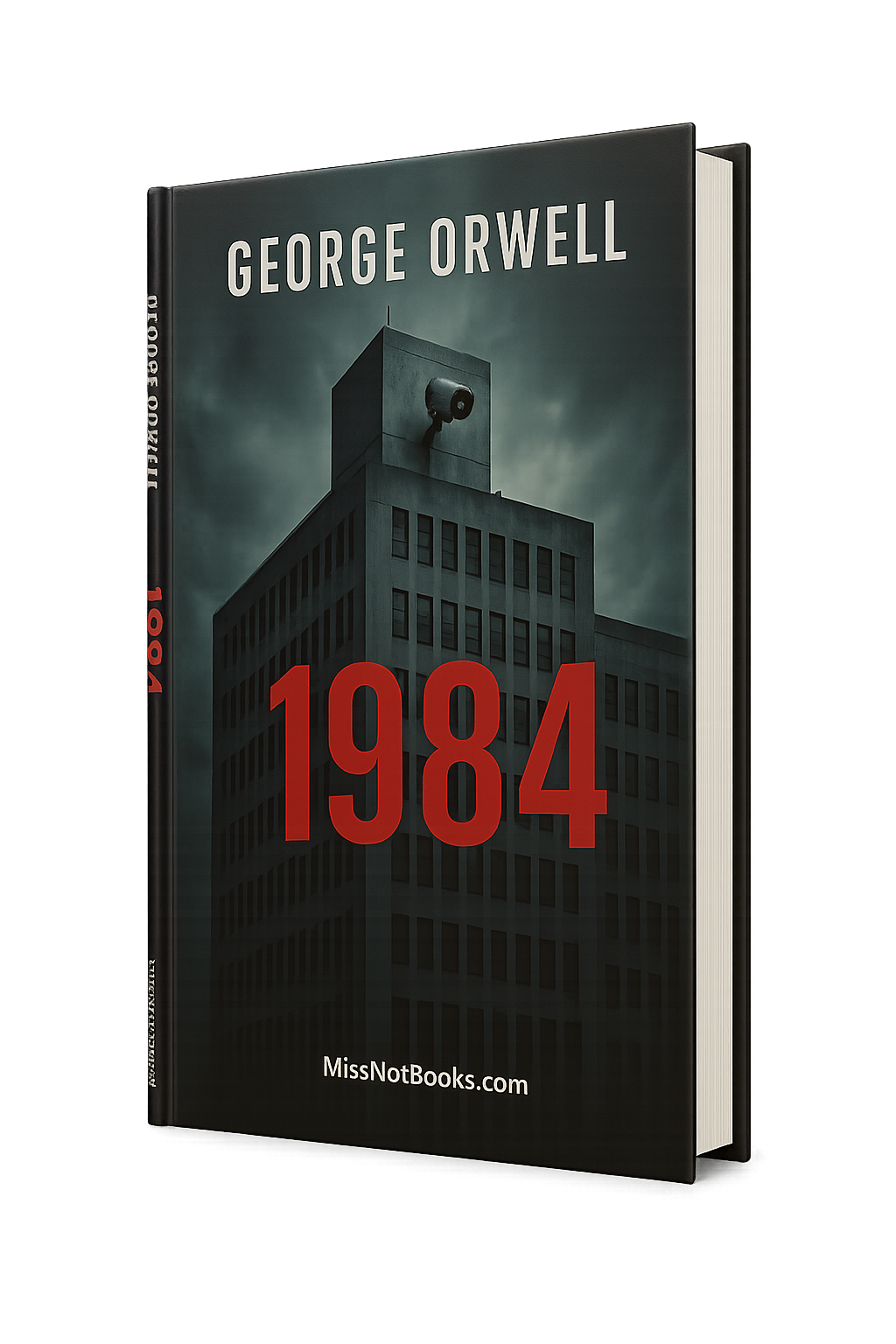
1984
Throughout history, certain literary works have carved out profound shifts in how we perceive and interact with the world. This particular book revolutionized the discourse surrounding personal freedom, state control, and the very nature of reality itself. Its themes send shivers through the corridors of power, encouraging generations to question orthodoxy and consider the consequences of unchecked authority and surveillance. It serves as a stark warning, challenging the complacency of societies across the globe, and reshaping our understanding of truth, privacy, and individuality in an age increasingly dominated by technology and mass media. Don’t miss the opportunity to engage with one of the most influential works of all time. Buy it today and explore the haunting truths of totalitarianism.
Core Ideas and Main Arguments
- Surveillance and Control: The narrative intricately explores how pervasive surveillance can impact individual freedom, illustrating a world where one's every move is monitored.
- The Manipulation of Language: The concept of "Newspeak" serves as a critical examination of how language can be twisted to limit thought and control ideological discourse.
- Psychological Manipulation: The dynamics of power are presented through the oppressive regime's psychological techniques to instill fear and compliance among citizens.
- The Nature of Truth: It raises fundamental questions about reality and how truth can be manufactured and distorted by the state, challenging readers to consider what they accept as truth in their own lives.
Author’s Intentions and Context
This compelling work emerged in the aftermath of World War II, a time when totalitarian regimes had revealed the dark potential of absolute power. The author, keenly aware of the political climates of both fascism and communism, set out to illustrate the stark ramifications of authoritarianism on personal liberties. By crafting a dystopic society where the state wields total control, the work addresses the fears of its era while offering foresight into the future of politics and technology.
Structure of the Book
The narrative is divided into three distinct parts:
- The Dystopian World: Initial chapters establish the oppressive environment, giving readers insight into daily life under constant surveillance.
- The Struggle for Individuality: The protagonist’s journey becomes a conduit for exploring resistance against ruthless control and the pursuit of personal truth.
- The Collapse of Resistance: The final sections depict the harrowing consequences of defiance against an omnipotent regime, culminating in a chilling realization of the power dynamics at play.
Key Takeaways
- The mechanisms of societal control can infiltrate and dictate personal thoughts and behaviors.
- Language is not merely a tool for communication, but a powerful instrument of oppression.
- Resistance against tyranny is fraught with danger, highlighting the resilience and vulnerability of the human spirit.
Why It’s Important to Read
This book remains profoundly relevant in today's world, where technology intersects with governance, often leading to concerns over privacy and the implications of surveillance. It serves as a cautionary tale that invites reflection for both political thought leaders and ordinary citizens alike. Those engaged in sociology, psychology, political science, or anyone interested in the complex relationship between individual rights and governmental power will find this work indispensable.
Impactful Quotes and Analysis
-
“Big Brother is Watching You.”
This iconic phrase encapsulates the essence of surveillance culture, provoking unsettling questions about privacy and the extent to which individuals are monitored by the state. -
“Freedom is Slavery.”
This paradox highlights the manipulative language employed by totalitarian regimes, illustrating how oppressive structures distort fundamental concepts to disempower citizens and control perception. -
“War is Peace.”
This statement emphasizes the disturbing normalization of conflict as a tool for maintaining social stability, prompting readers to ponder the implications of constant warfare on societal order and morality.
About the Author
George Orwell, born Eric Arthur Blair (1903-1950), was an English novelist, essayist, journalist, and critic. His works, characterized by keen social commentary and political critique, have left a lasting legacy in literature and intellectual thought. Orwell's engagement with issues of injustice, totalitarianism, and the complexities of language continues to resonate deeply in contemporary discourse, solidifying his role as a pivotal figure in the exploration of human rights and individual freedom.
This monumental work is 1984 by George Orwell, brought to you for educational purposes by MissNotBooks.com.